San Antonio’s Historic Lifestyle and Attractions for Visitors
San Antonio’s historic lifestyle is anchored by the San Antonio Missions, downtown landmarks, preserved neighborhoods, and cultural institutions that make the city easy to explore on foot, by bike, or along the river.
The city’s most significant historic sites range from Mission Concepción, Mission San José, Mission San Juan, and Mission Espada to The Alamo, San Fernando Cathedral, the King William Historic District, and the Spanish Governor’s Palace. The missions are part of San Antonio Missions National Historical Park, which protects four of the five Spanish colonial missions in the city and forms part of the only UNESCO World Heritage Site in Texas.
Downtown, visitors can pair major landmarks with free public spaces like Main Plaza, then continue south into historic neighborhoods and museum districts. Together, these sites show how San Antonio’s colonial, religious, immigrant, and civic history still shapes the experience of visiting the city today.
The Mission Trail: San Antonio's UNESCO World Heritage Sites
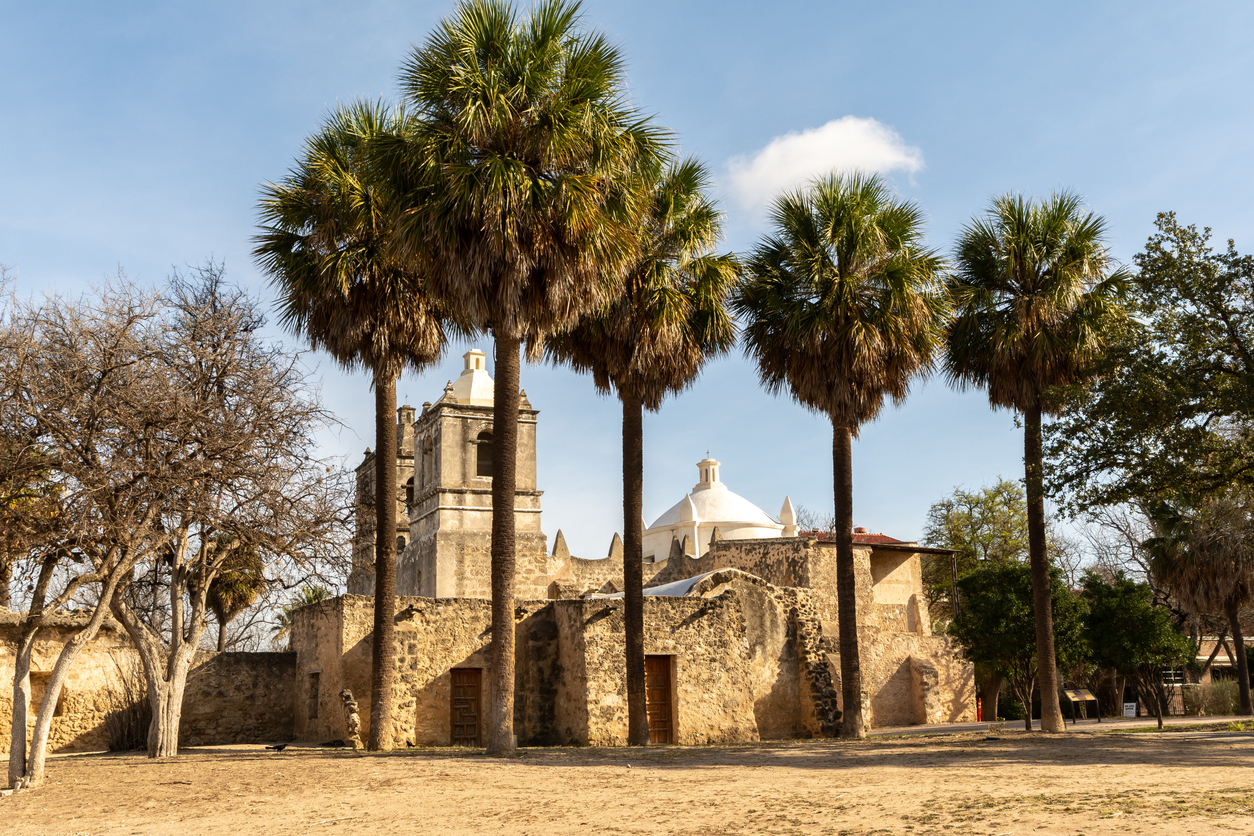
While The Alamo draws much of the attention, the Mission Trail offers a broader view of San Antonio’s Spanish colonial past. Mission Concepción, Mission San José, Mission San Juan, and Mission Espada are the four missions managed by the National Park Service within San Antonio Missions National Historical Park, and they stretch south of downtown along the river. The park notes that these mission communities have had a presence in the area for more than 300 years.
Visitors can explore the sites through the Mission Reach of the San Antonio River corridor, by bike, on foot, or by car. Park grounds are generally open from sunrise to sunset, while Mission San José and its visitor center operate daily from 9:00 a.m. to 5:00 p.m., except on major holidays listed by the park.
Mission San José serves as the park’s main visitor hub, while Mission Espada is known for its historic aqueduct. Mission Concepción is especially notable as one of the best-preserved colonial-era stone churches in the country and is widely recognized for retaining much of its historic form. These sites remain active Catholic parishes while also welcoming visitors.
Downtown Historic Landmarks: The Alamo and San Fernando Cathedral
Downtown San Antonio centers on landmarks that reflect both the city’s civic and religious history. San Fernando Cathedral, founded in 1731, describes itself as the oldest continuously functioning religious community in Texas, and its cathedral building is recognized by the church as the oldest standing church building in Texas.
The cathedral stands near Main Plaza, where San Antonio’s early civic life took shape, while The Alamo remains the city’s most widely recognized historic site. Visiting both in the same area gives travelers a strong introduction to the spiritual, military, and political history that shaped the city. Main Plaza continues to function as a public gathering space and cultural hub in the center of downtown.
San Fernando Cathedral is also the backdrop for “San Antonio | The Saga,” a large-scale light projection presented at Main Plaza, which has become one of downtown’s best-known evening attractions.
King William District: Victorian Mansions and Historic Home Museums
Just south of downtown, the King William Historic District showcases San Antonio’s 19th-century residential history through grand homes, shaded streets, and strong ties to the city’s German heritage. The neighborhood developed in the second half of the 19th century and became associated with prosperous German merchants and mill owners.
One of the area’s best-known sites is The Guenther House, connected to Pioneer Flour Mills. The Guenther House notes that Carl Hilmar Guenther relocated his milling business to the San Antonio River and began building the family home in 1860, making the property one of the district’s most significant historic anchors.
The district remains one of the city’s most appealing areas for walking tours because it combines architecture, local history, and easy access to nearby museums, restaurants, and the river. Its preserved homes and landscaped streets help visitors experience a more residential side of historic San Antonio.
Main Plaza and Spanish Governor's Palace: Colonial San Antonio Preserved
Main Plaza and Military Plaza preserve some of the oldest layers of San Antonio’s urban history. Main Plaza traces its identity to Plaza de las Islas Canarias, the civic space associated with the Canary Island settlers who helped establish the community in the 18th century. Today it remains a central public square linking government buildings, San Fernando Cathedral, and downtown pedestrian activity.
Nearby, the Spanish Governor’s Palace is one of the city’s most important colonial-era sites. The City of San Antonio describes it as the original comandancia, or residence and working office, for the captains of the Presidio San Antonio de Béjar from 1722 into the early 1800s.
Rather than dating it simply to 1749 as a finished standalone landmark, it is more accurate to describe it as an 18th-century presidio structure tied to the military settlement on Military Plaza.
Together, Main Plaza, Military Plaza, and the Spanish Governor’s Palace give visitors one of the clearest views of colonial San Antonio without leaving downtown.
Historic Lifestyle: River Walk Traditions, Plazas, and Cultural Spaces
San Antonio’s historic lifestyle extends beyond missions and landmarks into the public spaces where daily life has unfolded for centuries. The San Antonio River Walk, originally developed in the 1930s as part of flood control efforts, has evolved into one of the city’s defining visitor experiences, blending historic architecture, shaded walkways, and riverside dining.
Nearby, La Villita Historic Arts Village preserves one of San Antonio’s oldest neighborhoods, with roots dating back to the 18th century. Today, its restored buildings house artisan shops and galleries that reflect the city’s cultural traditions.
Hemisfair, originally created for the 1968 World’s Fair, connects historic preservation with modern urban development. The area now includes public parks, cultural institutions, and access to landmarks like the Tower of the Americas, offering a different perspective on San Antonio’s evolution.
Together, these spaces highlight how San Antonio’s historic lifestyle is not only preserved in buildings, but actively experienced through its plazas, riverfront, and community gathering places.
How to Visit Historic San Antonio: Free Sites, Tours, and Trail Routes
Historic San Antonio includes a strong mix of free attractions and timed free-admission opportunities. The missions themselves are free to visit, and Main Plaza is open daily. Ruby City is also free and open to the public, while Contemporary at Blue Star offers free admission to its exhibitions.
For museum visits with specific free windows, the Witte Museum offers free Tuesday afternoon admission for Bexar County residents, and the McNay Art Museum offers free general admission on Thursday evenings and on the first Sunday of each month, with some limits still applying to special exhibitions.
The Institute of Texan Cultures reopened in a new downtown location on January 29, 2026, so visitors planning a cultural stop should now look for it on West Houston Street rather than relying on older references to its previous Hemisfair-area building.
For travelers who want a practical route, a strong historic itinerary is to begin downtown with The Alamo, San Fernando Cathedral, Main Plaza, and the Spanish Governor’s Palace, then continue south along the Mission Trail, or head to King William and nearby art spaces for a mix of architecture and museum time. That approach makes it easier to connect San Antonio’s colonial, religious, neighborhood, and cultural history in one visit.
How to Choose the Right Historic Sites for Your Visit
With so many historic attractions, choosing where to spend your time depends on your interests.
- Architecture: Visit Mission Concepción, the King William District, and the Spanish Governor’s Palace for preserved historic design
- History: Focus on The Alamo, the Mission Trail, and Main Plaza for key moments in Texas and colonial history
- Religious Heritage: Explore San Fernando Cathedral and the active mission churches for ongoing spiritual traditions
- Walking and Scenic Exploration: The River Walk and Mission Reach trails offer the most accessible and visually engaging routes
- Museums and Cultural Learning: Combine visits to Witte Museum, Institute of Texan Cultures, and Ruby City for a broader perspective
This approach allows visitors to tailor their experience based on what interests them most while still capturing the essence of San Antonio’s historic lifestyle.